


India’s electric vehicle landscape is entering a decisive phase after early adoption led by compact city EVs and a handful of premium imports, the market is now preparing for a broader, more mature set of electric offerings.
For buyers tracking every upcoming EV cars in India the next 12–18 months promise meaningful change rather than incremental updates.
Government incentives under FAME, expanding state-level EV policies and steady progress in public charging infrastructure have created a more predictable environment for manufacturers at the same time consumer interest has shifted from curiosity to expectation.
buyers now demand longer range, safer platforms, and pricing that aligns with petrol and diesel rivals this combination explains why upcoming EV cars in India are drawing serious attention from both urban commuters and long-distance users.
Table of Contents
What to Expect from Upcoming EV Cars in India
The next generation of electric vehicles launching in India is expected to focus on four key areas.
First is range consistency manufacturers are moving beyond headline numbers toward usable real-world driving range especially for highway conditions second is charging flexibility with faster DC charging compatibility becoming standard even in mid-segment models.
Third safety and vehicle architecture are improving with dedicated EV platforms offering better crash structures and packaging finally, segment expansion is underway from compact SUVs to full-size family cars and lifestyle EVs.
Pricing will remain competitive, particularly as localisation of battery packs and components increases this is why every major brand is positioning its upcoming EV car in India carefully, rather than rushing half-developed products to market.
Read This Also: Tata Avinya: India’s Most Futuristic EV SUV With 500+ km Range & Premium Luxury
Top 5 Best Upcoming EV Cars in India
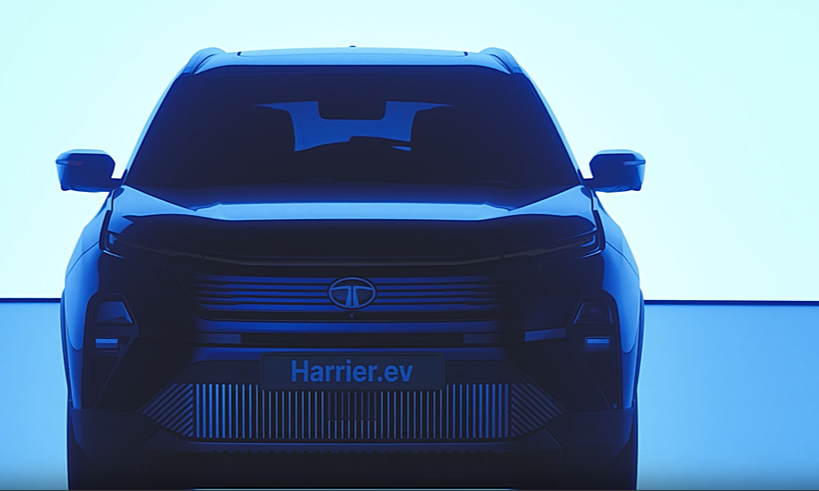
Tata Harrier EV
The Tata Harrier EV marks Tata Motors clear intent to move electric mobility into the premium SUV space unlike converted ICE models this EV is expected to use a dedicated electric architecture, allowing better weight distribution, improved safety and higher real-world range it targets buyers who want the size, road presence and touring ability of a diesel SUV, but with electric efficiency.
- Expected range: 500 km or more.
- Gen 2 EV platform with enhanced crash safety.
- Advanced ADAS and connected car technology.
- Possible dual-motor AWD setup.
- Expected price: ₹28–32 lakh (ex-showroom).
- Meant for: Premium SUV buyers upgrading from diesel or petrol.
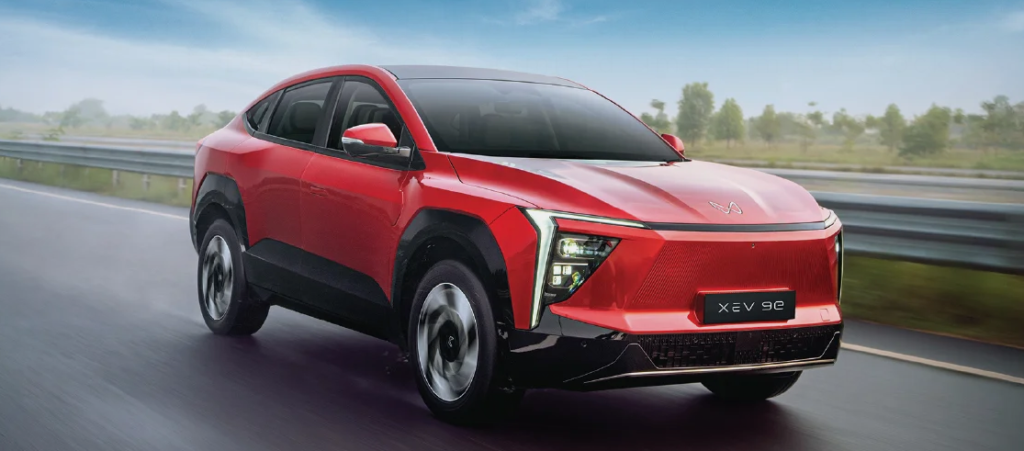
Mahindra XEV 9e
Mahindra XEV 9e is one of the most important upcoming electric SUVs from an Indian manufacturer. Developed on the new INGLO platform, it is designed as a born-electric product rather than an adapted model the focus is expected to be on fast charging, strong performance, and modern software-driven features, reflecting Mahindra’s global EV ambitions.
- Expected range: up to 500 km.
- INGLO EV platform with flat-floor design.
- Level 2 ADAS and advanced digital cockpit.
- High-speed DC fast charging support.
- Expected price: ₹25–30 lakh (ex-showroom).
- Meant for: Tech-savvy SUV buyers prioritising performance and safety.
Read This Also: Nissan Tekton – A Bold New SUV Icon: Price, Features, Mileage & 2027 Launch Revealed
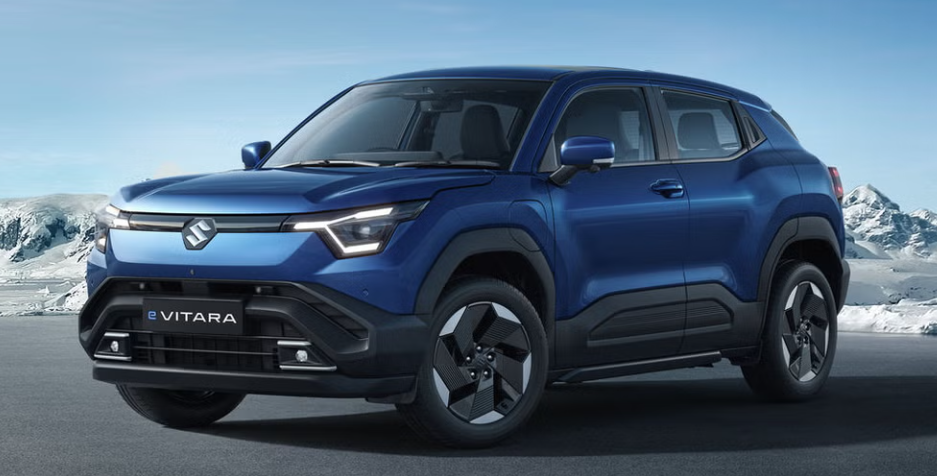
Maruti Suzuki e Vitara
Maruti Suzuki’s first electric SUV is expected to play a crucial role in mass EV adoption the e Vitara is being developed with strong localisation and global EV inputs, ensuring cost control and reliability rather than chasing aggressive performance figures, the focus is likely to be on efficiency, ease of ownership, and wide service reach across India.
- Expected range: around 500 km.
- Toyota-backed EV powertrain technology.
- Emphasis on reliability and low running costs.
- Wide service and support network.
- Expected price: ₹20–25 lakh (ex-showroom).
- Meant for: Practical family buyers entering the EV segment.
Hyundai Creta EV
Hyundai Creta EV aims to electrify one of India’s most trusted SUV nameplates by retaining the familiar Creta design language and comfort-focused setup, Hyundai is expected to make the switch to electric less disruptive for existing customers the EV version will likely prioritise smooth urban drivability, refined interiors, and proven safety features.
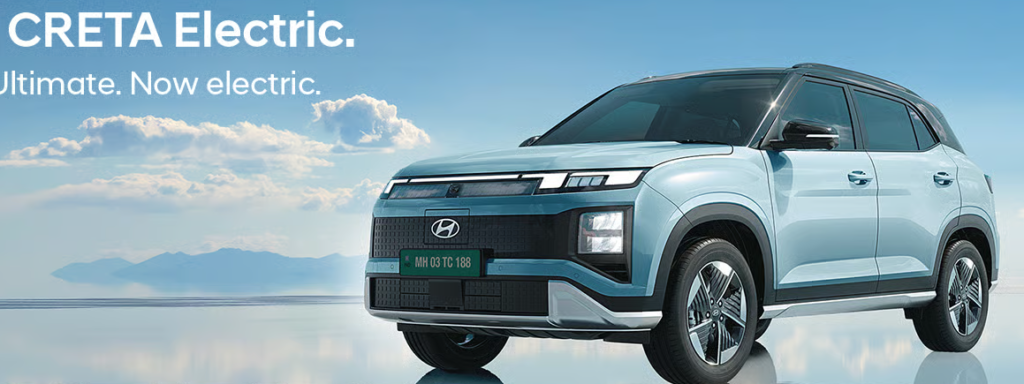
- Expected range: approximately 450 km.
- Hyundai’s connected car and infotainment suite.
- Comfortable, family-friendly cabin layout.
- Multiple drive and regeneration modes.
- Expected price: ₹22–26 lakh (ex-showroom).
- Meant for: Urban families transitioning from ICE SUVs to EVs.
Tata Sierra EV
The Tata Sierra EV brings back a legendary Indian nameplate in an all-electric form unlike performance-focused SUVs, the Sierra EV is expected to lean heavily on design, comfort and everyday usability with its lifestyle-oriented positioning and spacious cabin concept it aims to attract buyers looking for something distinctive in the growing EV market.
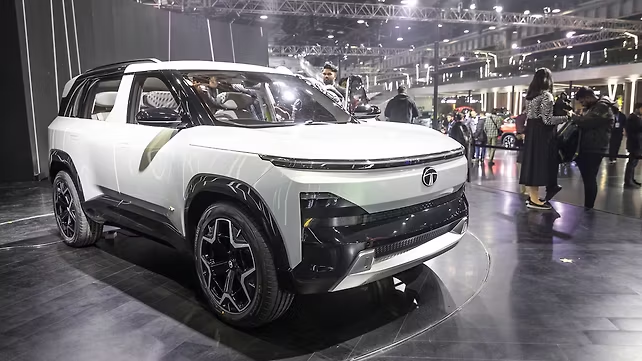
- Expected range: 500 km plus.
- Dedicated EV platform with modern proportions.
- Minimalist interior and advanced HMI systems.
- Focus on comfort and cabin space.
- Expected price: ₹25–30 lakh (ex-showroom).
- Meant for: Design-conscious and lifestyle-focused EV buyers.
Read This Also: Hyundai Creta EV Price & Full Review: 510 km Range, Premium Design & Smart Tech
Why These 5 EVs Matter
These models show how upcoming electric cars in India are addressing different needs from affordable family SUVs to premium long-range electric vehicles launching in India, the spread is wider than ever some focus on city usability others on highway comfort and fast charging, indicating a more balanced EV ecosystem.
Charging Infrastructure & Ownership Perspective
India’s fast-charging network is expanding steadily along highways and in major cities home charging remains central to EV ownership and most upcoming EV cars in India will support overnight AC charging alongside rapid DC options this dual approach is making daily ownership more practical than early-generation EVs.
Price Expectations & Market Impact
As competition intensifies, pricing of new EV cars launching in India is expected to stabilise brands are carefully positioning products to avoid overlap while addressing petrol and diesel alternatives directly this competition could accelerate EV adoption across segments.
The upcoming EV car in India pipeline reflects a market moving from experimentation to maturity with clearer regulations, improving infrastructure and stronger products, the next wave of electric vehicles will define how quickly India transitions to cleaner mobility.
Official specifications and prices will become clearer closer to launch but the direction is already evident electric vehicles are no longer niche, they are becoming mainstream.